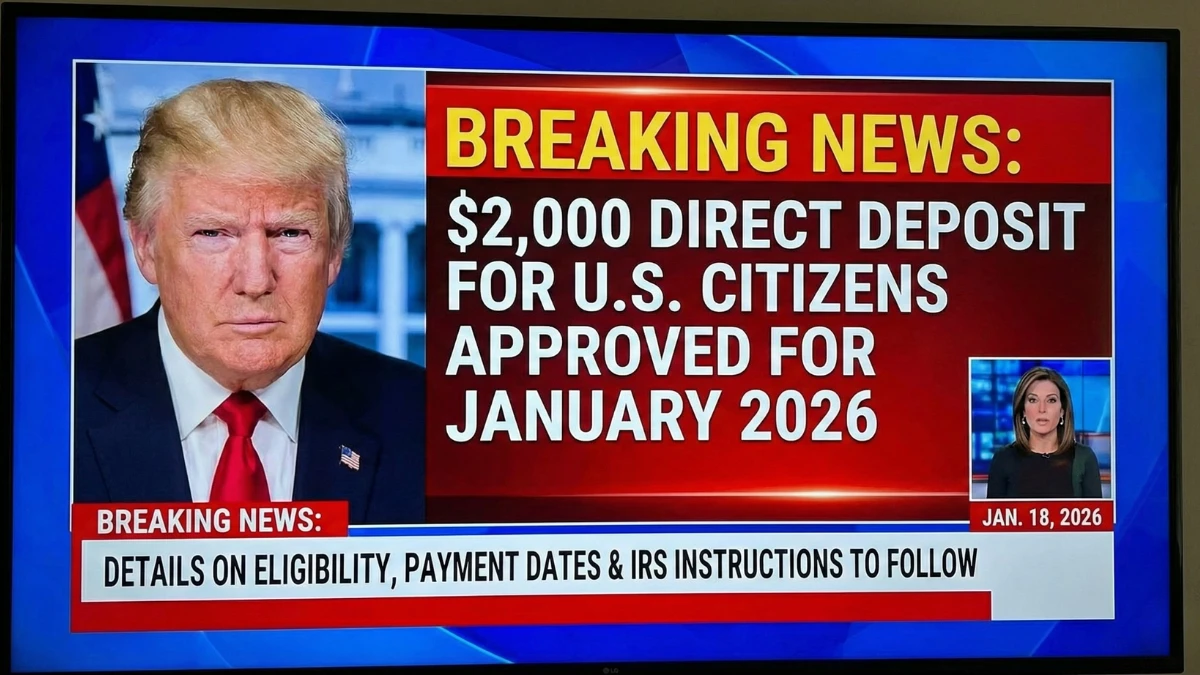
$2,000 Direct Deposit:As January 2026 begins, many Americans are hoping for a better financial start to the year. Between rising prices, medical expenses, rent, and lingering holiday bills, even a little financial assistance can make a big difference. That’s why the discussion of a $2,000 direct deposit for American citizens in January 2026 has garnered so much attention.
But what does this payment actually entail? Is it guaranteed? Who is eligible, and when might the money arrive? This guide explains everything in simple, straightforward language – without any exaggeration or false promises.
What is the $2,000 direct deposit?
The $2,000 direct deposit being discussed is not the newly announced, universal stimulus check for all Americans. Instead, it typically refers to a legitimate federal payment processed by the IRS, usually at the beginning of the year.
For many people, this amount may come from:
- Federal tax refunds
- Refundable tax credits
- IRS payment corrections or adjustments
- Certain benefit-related payments
The exact amount varies for each individual. Some may receive around $2,000, some more or less, and some may not receive any payment at all.
Who is eligible?
Eligibility is determined based on current IRS regulations, not solely on citizenship. If you meet certain criteria, you may be eligible for a $2,000 direct deposit in January 2026, such as:
Filing a 2025 federal tax return
- Qualifying for refundable credits such as the Earned Income Tax Credit (EITC) or the Child Tax Credit
- Receiving corrected or delayed IRS payments
- Being enrolled in a federal benefit program processed by the IRS
Income level, filing status, number of dependents, and prior tax information all play a role in determining eligibility.
Payment Dates: When can you expect your money?
There is no single, nationwide payment date for this deposit. The timing depends on when your return or payment is processed.
Here is a general timeline:
- Mid-to-late January 2026: The IRS will begin accepting tax returns.
- Within 21 days of acceptance: Most direct deposits are issued.
- Late January to early February: Many eligible taxpayers may receive their payments.
- Paper checks: These may take several additional weeks.
Those who file early and choose direct deposit typically receive their payments the fastest.
How will the IRS send the payment?
If you are eligible, the IRS will send the payment using one of the following methods:
- Direct deposit to your bank account
- A paper check mailed to your address
- In some cases, a prepaid debit card
The IRS strongly recommends direct deposit, as it reduces the risk of delays and lost payments.
Important IRS Instructions to Follow
To avoid delays or problems, the IRS advises taxpayers to:
- File your return using reliable tax software or a tax professional.
- Double-check your bank account and routing numbers.
- Make sure your mailing address is up to date.
- Use official IRS tools like “Where’s My Refund?”
- Beware of scams—the IRS does not contact taxpayers via social media or text messages.
Be cautious of any messages requesting payments, fees, or personal information.
Why is there so much confusion?
Many Americans are associating the money they received at the beginning of the year with previous stimulus checks. This is understandable, but no official announcement has been made regarding any $2,000 stimulus payments for January 2026.
Most of these payments are related to tax refunds or credits, not emergency relief programs. Understanding this helps manage expectations and reduces unnecessary stress.
Is a $2,000 deposit taxable?
In most cases, tax refunds and refundable credits are not considered taxable income. However, certain adjustments or corrections may affect future tax filings. It’s always a good idea to keep IRS notices for your records.
Why this payment is important
For many families, $2,000 isn’t just extra cash—it’s a lifeline. It can help pay rent, utility bills, groceries, medical bills, or reduce debt. While it won’t solve every financial problem, it can provide much-needed relief during difficult times.
Final Thoughts
The prospect of a $2,000 direct deposit for U.S. citizens in January 2026 is real for some—but it’s not automatic for everyone. Eligibility depends on tax filing, credit history, and IRS records. The best approach is to stay informed, file early, and rely only on official IRS guidance.
Clear information leads to better decisions—and peace of mind at the start of the new year.
FAQs
Q 1. Is every U.S. citizen getting a $2,000 deposit in January 2026?
No. Payments are issued only to eligible individuals based on IRS rules.
Q 2. Do I need to apply for the $2,000 direct deposit?
In most cases, no application is required if you file taxes and your information is current.
Q 3. Will Social Security recipients receive this payment?
Some may receive payments if they qualify through tax credits or adjustments, but it’s not automatic for all.
Q 4. What if I don’t receive my deposit in January?
Some payments may arrive in February or later, depending on processing time.
Q 5. How can I check my payment status?
Use the official IRS “Where’s My Refund?” tool or IRS online account once processing begins.